Virtuo
Virtuo
Client
Virtuo Business
Year
2024
Virtuocard is an NFC-enabled smart identity and transaction system developed by DeVirtuosphere to digitize and transform school operations in Nigeria, serving both basic and tertiary institutions.
Virtuocard is an NFC-enabled smart identity and transaction system developed by DeVirtuosphere to digitize and transform school operations in Nigeria, serving both basic and tertiary institutions.
Overview
Overview
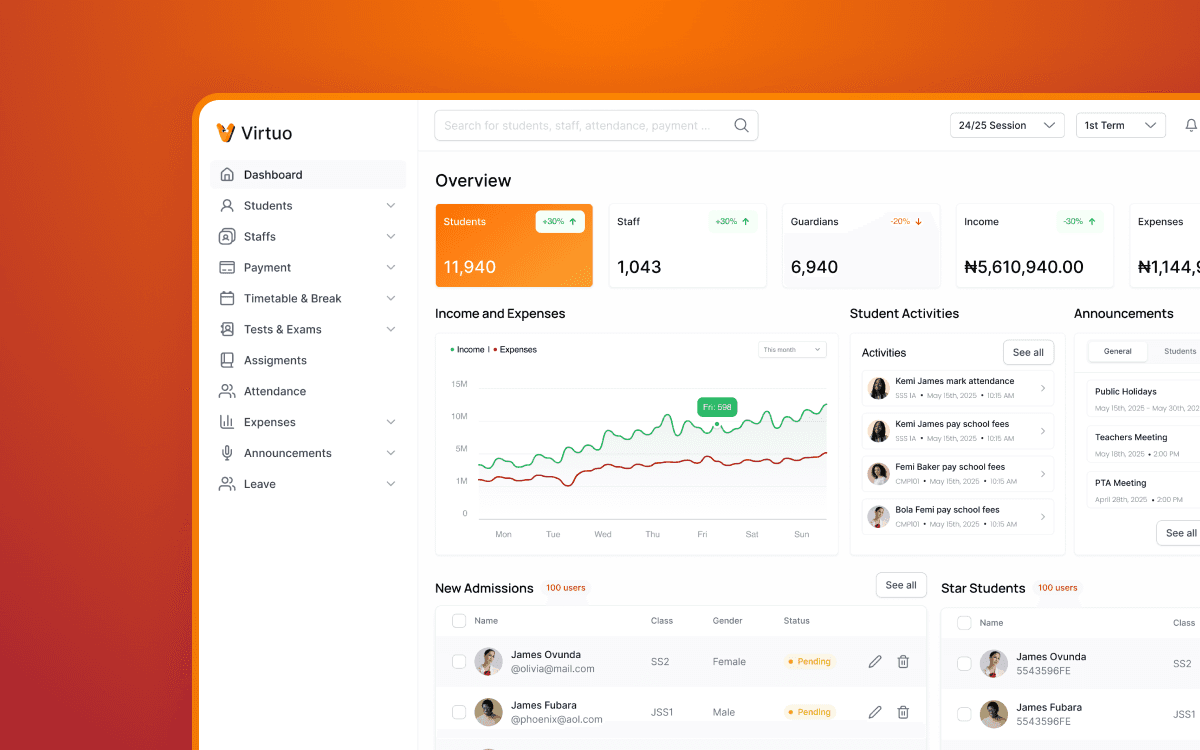
Virtuocard is a unified platform designed to modernize core school functions, evolving from a simple attendance tool to a comprehensive management system. As the UI/UX Designer, my goal was to create an intuitive, reliable, and easily adoptable system that integrates identification (via NFC-enabled physical cards), finance, access control, and academic management into a seamless experience for students, staff, and administration in Nigerian educational institutions.
Client
Virtuo Business
Industry
Edtech and Fintech
Service
Transforming Nigerian School Operations: The Virtuocard Design Journey
Duration
3 months
What was the problem?
What was the problem?
What was the problem?
What was the problem?
Traditional schools in Nigeria were deeply entrenched in manual, paper-based processes for attendance, student/staff records, financial transactions, academic management (tests, exams, timetables), and expense tracking. This reliance on disconnected and often inefficient methods created significant operational hurdles and a strong inherent resistance to adopting new digital technologies.
What was the goal?
What was the goal?
The primary objective was to design a transformative digital system that schools would find intuitive, reliable, and easy to adopt. The aim was to overcome the resistance to change by providing a user-friendly platform that seamlessly digitizes core school functions, thereby enhancing efficiency, transparency, and accountability across administrative and academic operations.
The primary objective was to design a transformative digital system that schools would find intuitive, reliable, and easy to adopt. The aim was to overcome the resistance to change by providing a user-friendly platform that seamlessly digitizes core school functions, thereby enhancing efficiency, transparency, and accountability across administrative and academic operations.
The primary objective was to design a transformative digital system that schools would find intuitive, reliable, and easy to adopt. The aim was to overcome the resistance to change by providing a user-friendly platform that seamlessly digitizes core school functions, thereby enhancing efficiency, transparency, and accountability across administrative and academic operations.
The primary objective was to design a transformative digital system that schools would find intuitive, reliable, and easy to adopt. The aim was to overcome the resistance to change by providing a user-friendly platform that seamlessly digitizes core school functions, thereby enhancing efficiency, transparency, and accountability across administrative and academic operations.
My Design Process & Approach
My Design Process & Approach
I approached this project by focusing on user needs and building trust to facilitate the transition from manual to digital systems. My process involved:
In-depth User Research: Conducted comprehensive research with students, teachers, and administrators to understand their daily workflows, challenges, and mental models regarding attendance, payments, records, scheduling, and expenses.
Synthesizing Findings: Analyzed research data to identify key pain points and opportunities for improvement.
Establishing Core Design Principles: Based on insights, I defined three core principles: simplicity (to reduce complexity), clear feedback (to guide users), and trust-building (to support the transition from manual processes).
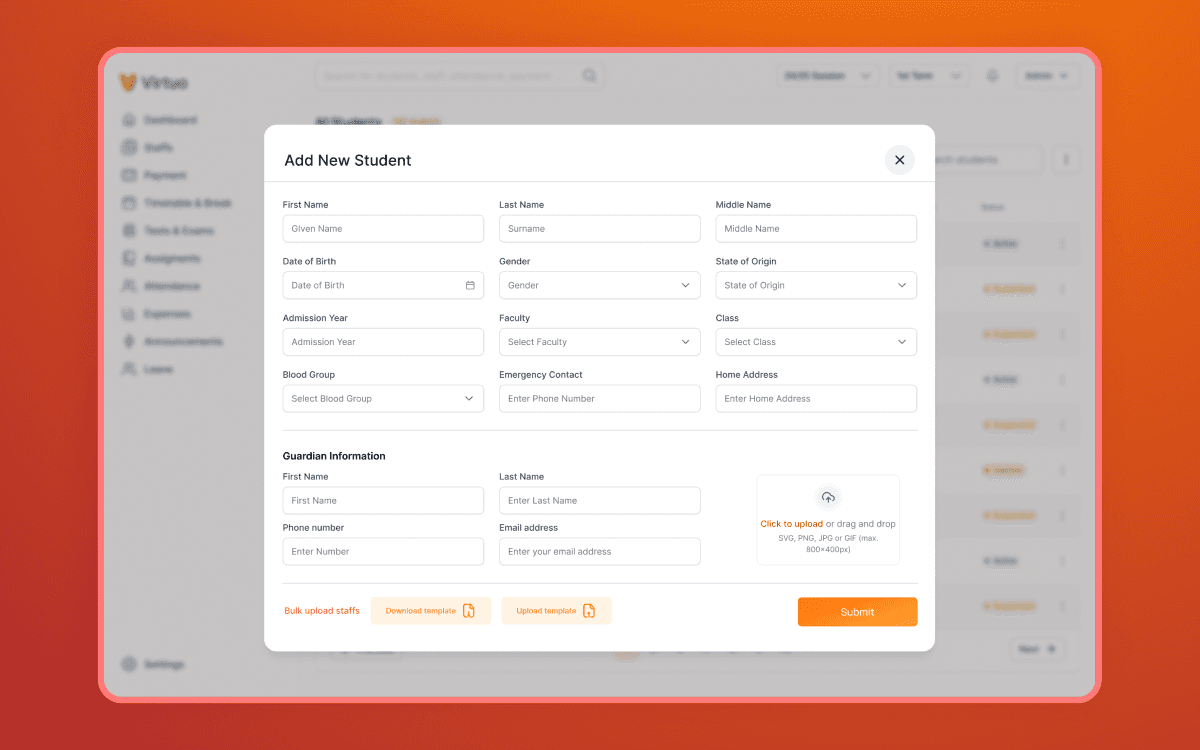
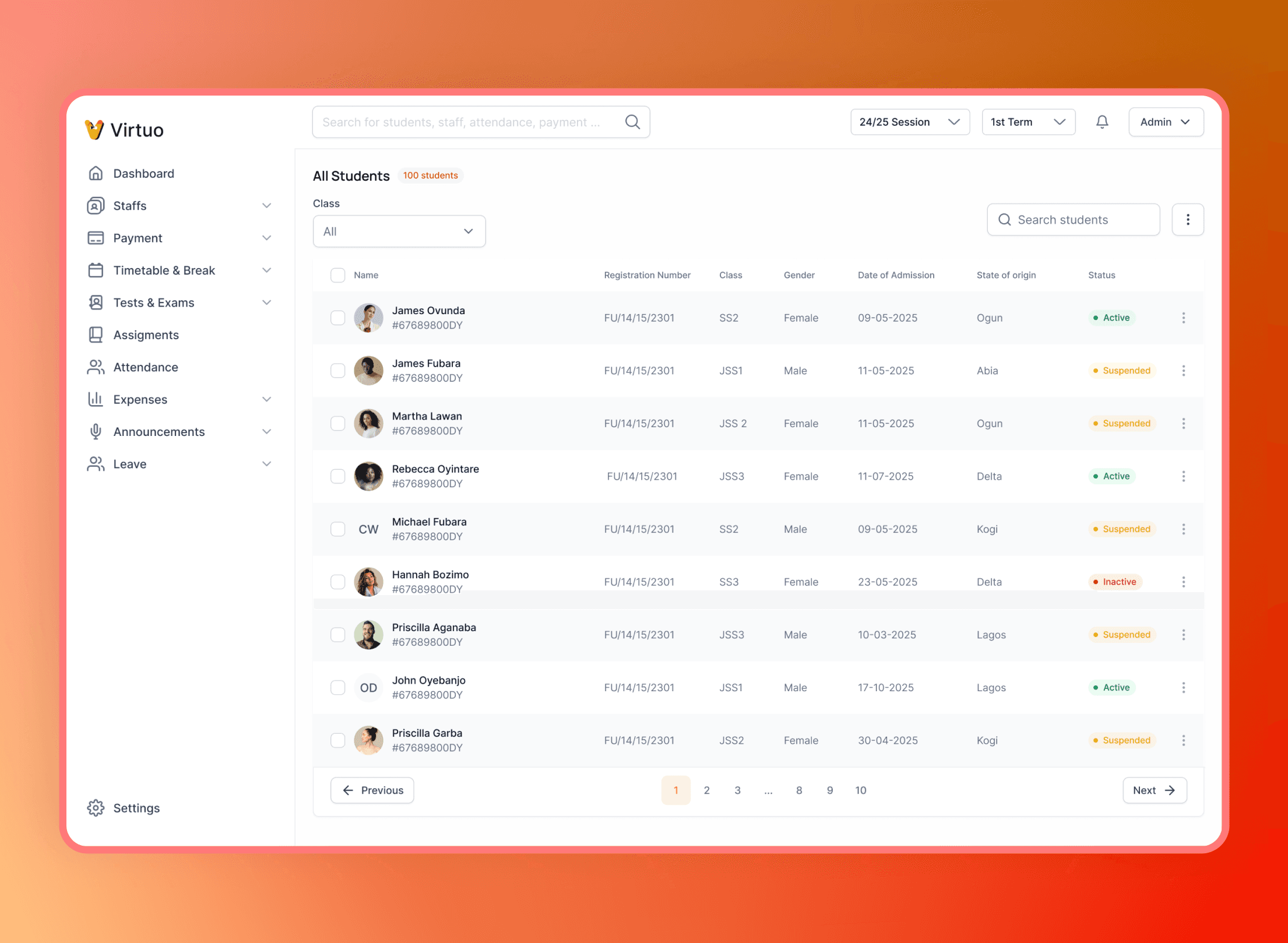
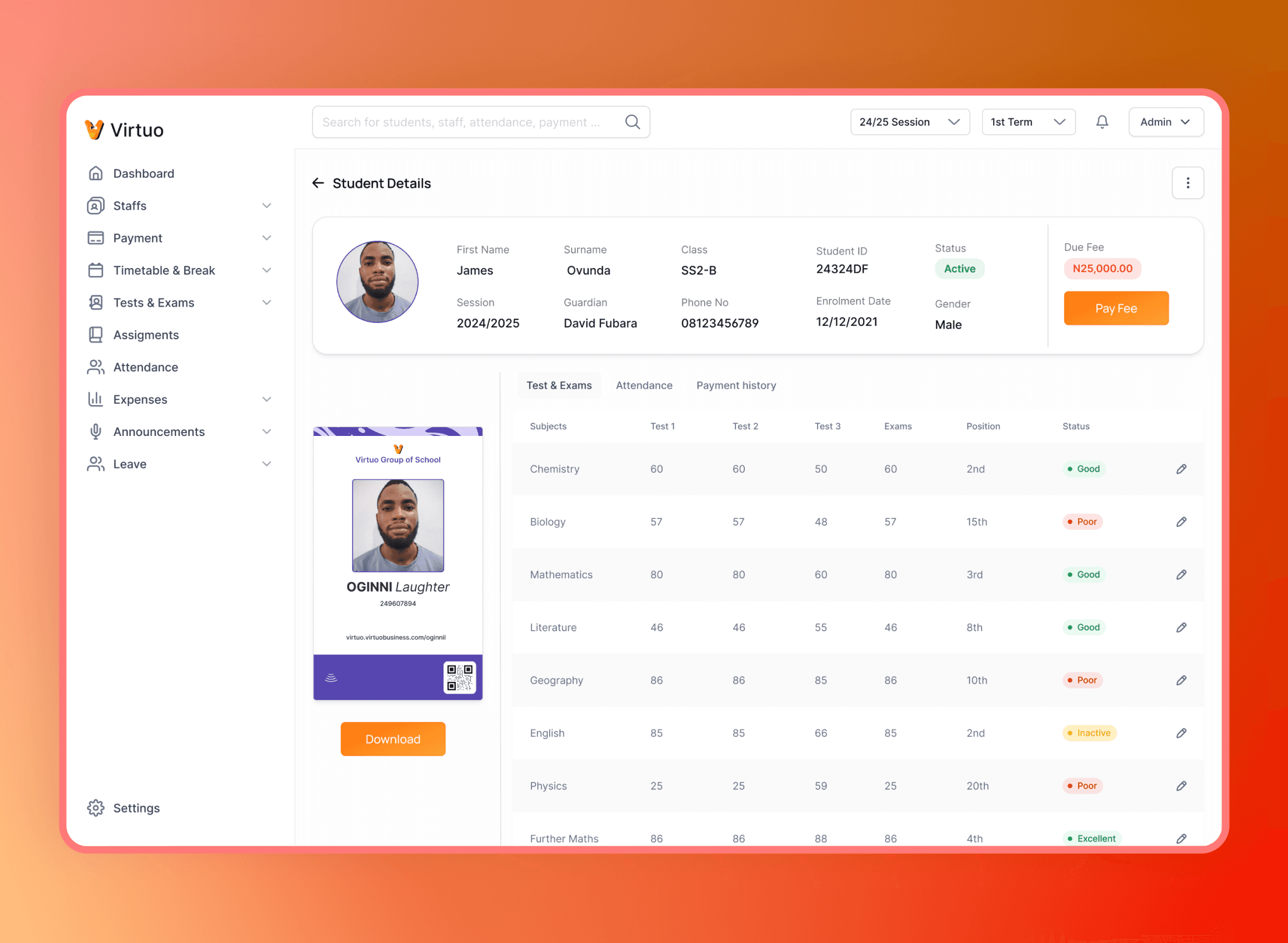
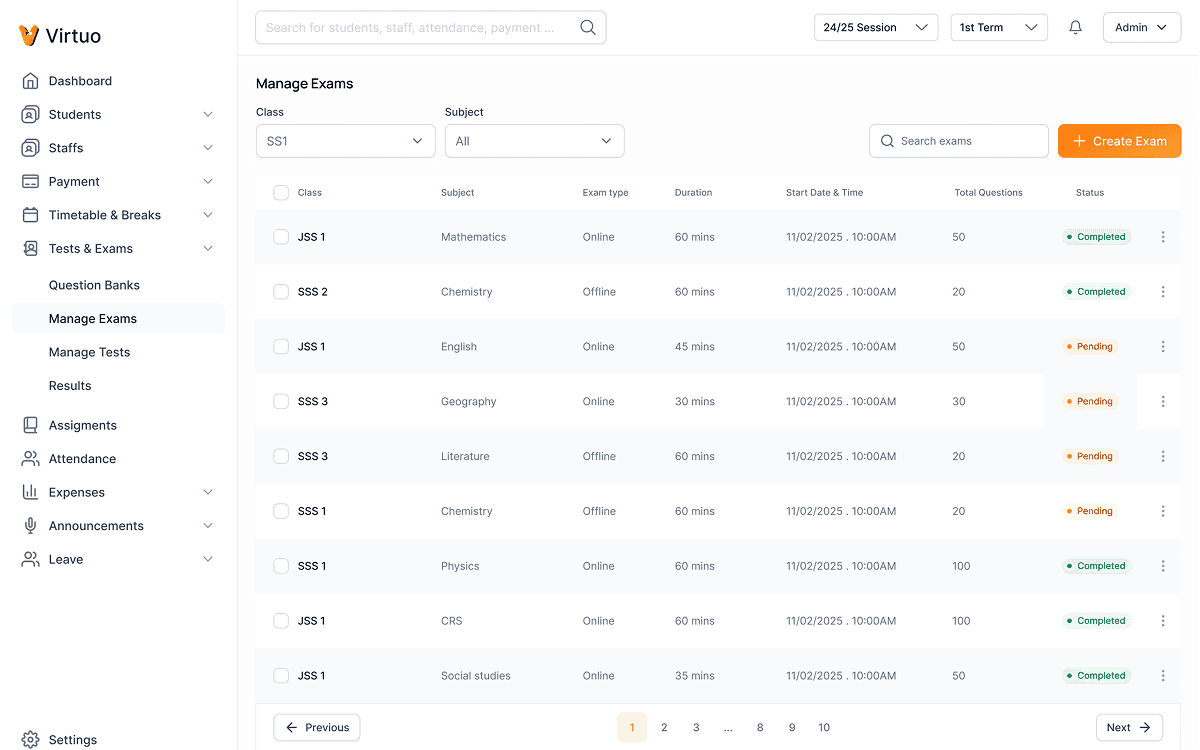
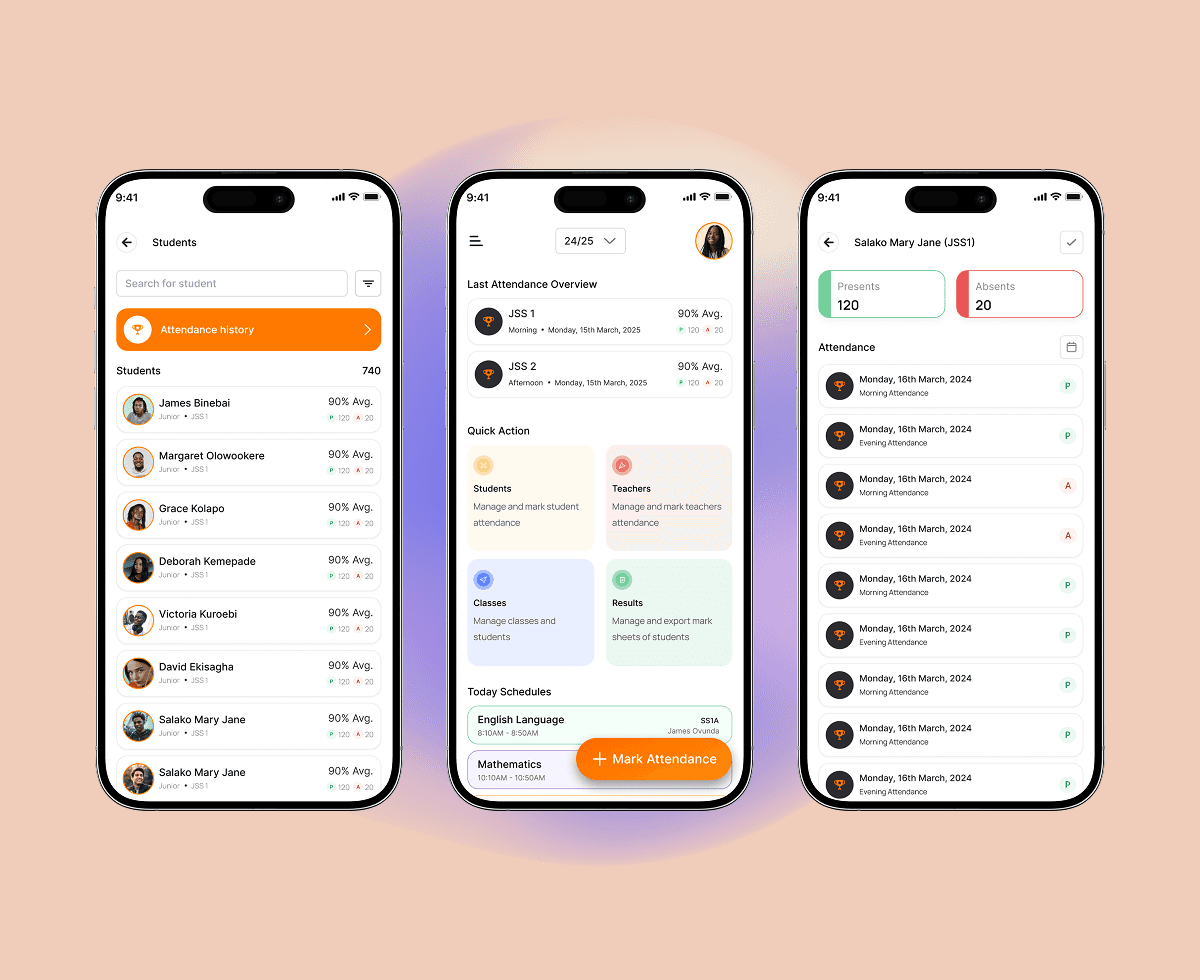
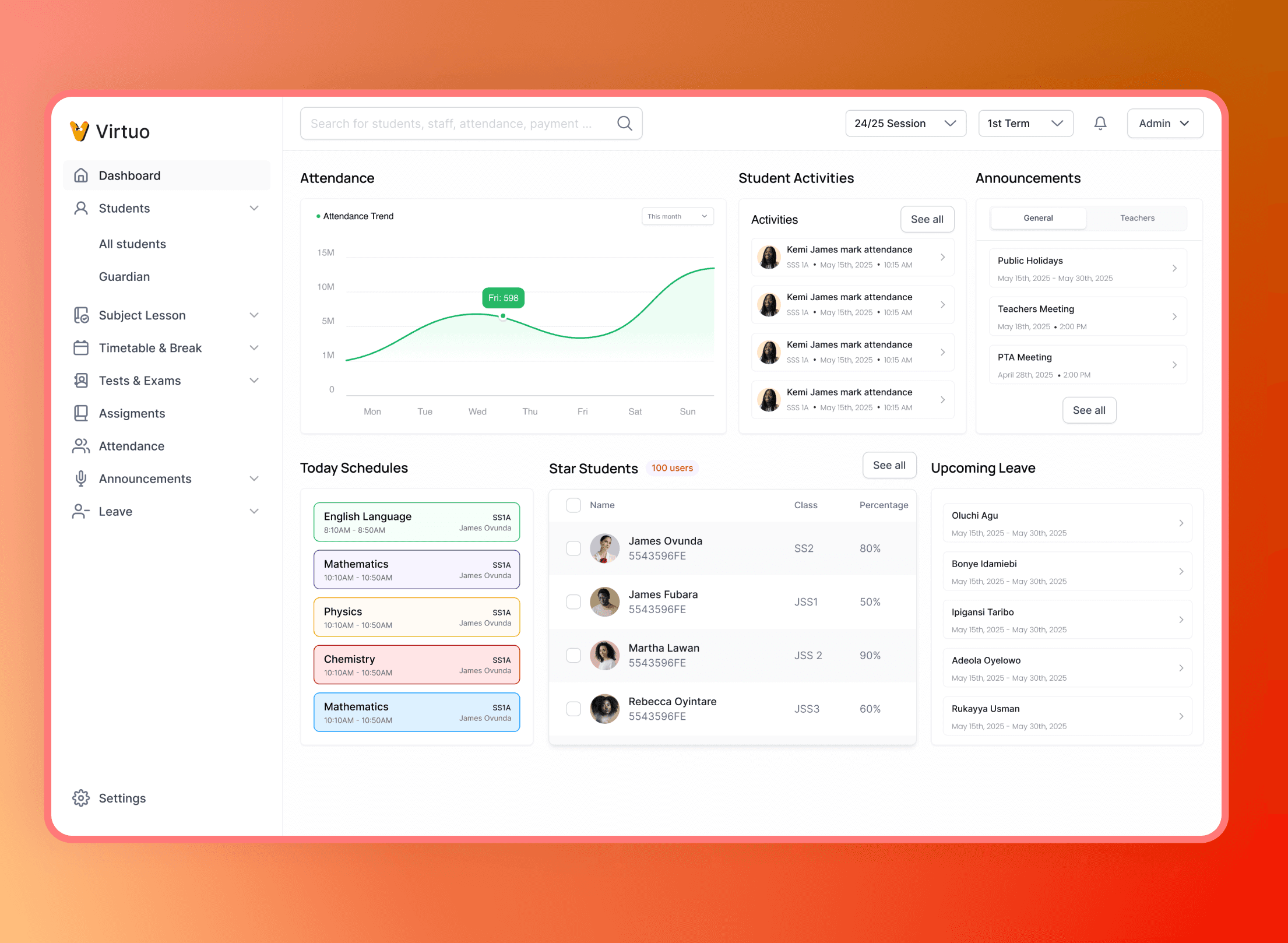
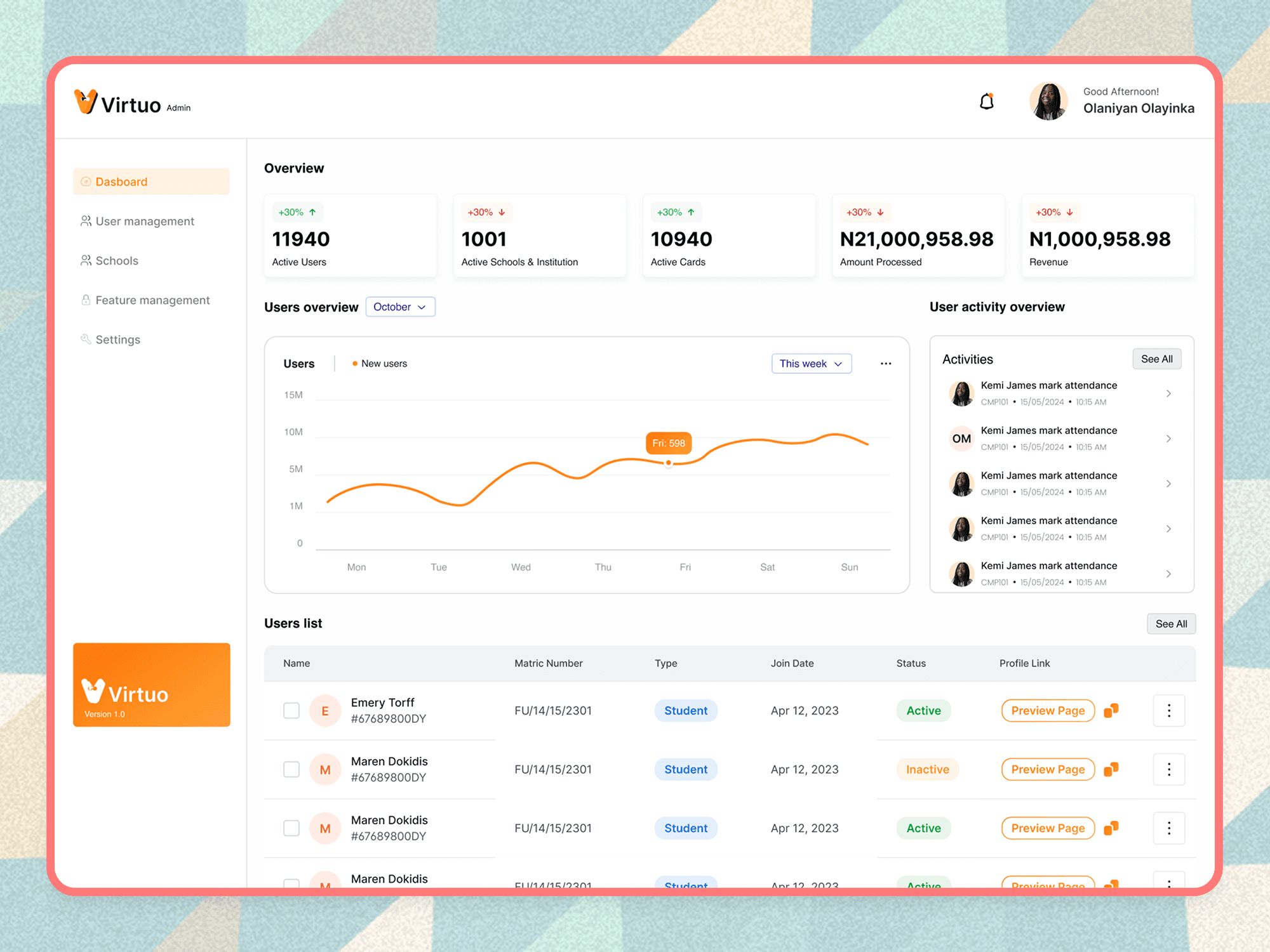
Iterative Design & Prototyping: Developed tailored interfaces for different user groups and functionalities, including administrative dashboards, a teacher-focused mobile app for NFC attendance, student web dashboards, and the Virtuopay mobile app.
Usability Testing & Refinement: Conducted multiple rounds of usability testing and gathered feedback from pilot schools, which was critical in refining the design to meet real user needs and address adoption barriers.
Designing for Trust and Adoption
The design philosophy centered on creating a system that felt practical, user-centered, and well-suited to the everyday realities of school operations. Key considerations included:
Simplicity and Clarity: Focused on intuitive navigation, clear data entry, and straightforward workflows to reduce the learning curve and build user confidence.
Tailored User Experiences:
For Basic Schools: Designed administrative interfaces for managing student/staff records, assessments, expenses, and timetables. A dedicated teacher mobile app utilized NFC for seamless attendance. Student NFC cards enabled quick attendance and cashless payments.
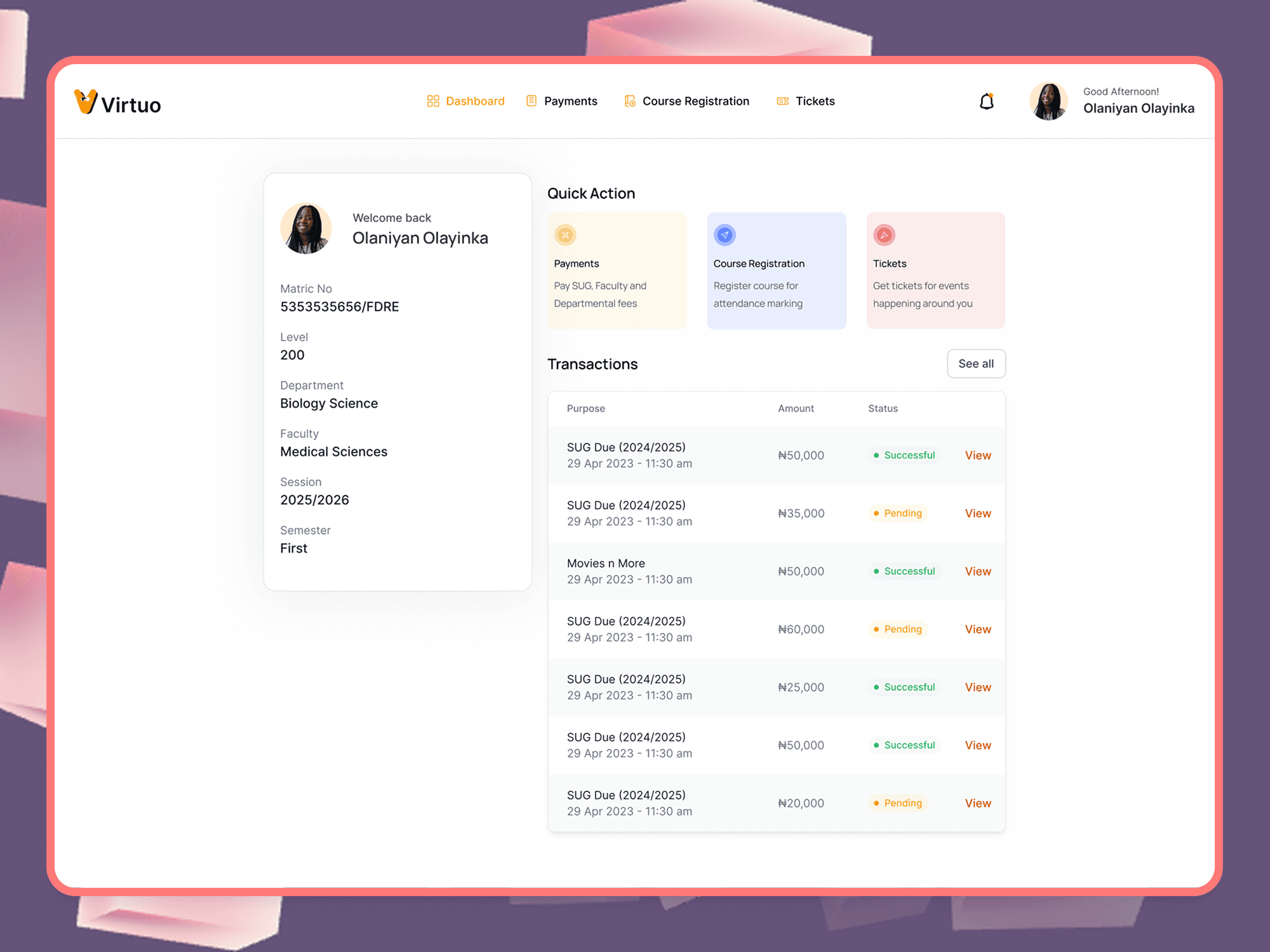
For Tertiary Institutions: Developed a student web dashboard for course registration, fee payments (SUG, faculty, departmental), transaction history, and event ticketing. Separate interfaces were created for school, SUG, faculty, and departmental administrators to manage enrollment, course catalogs, lecturer information, and fee collections.
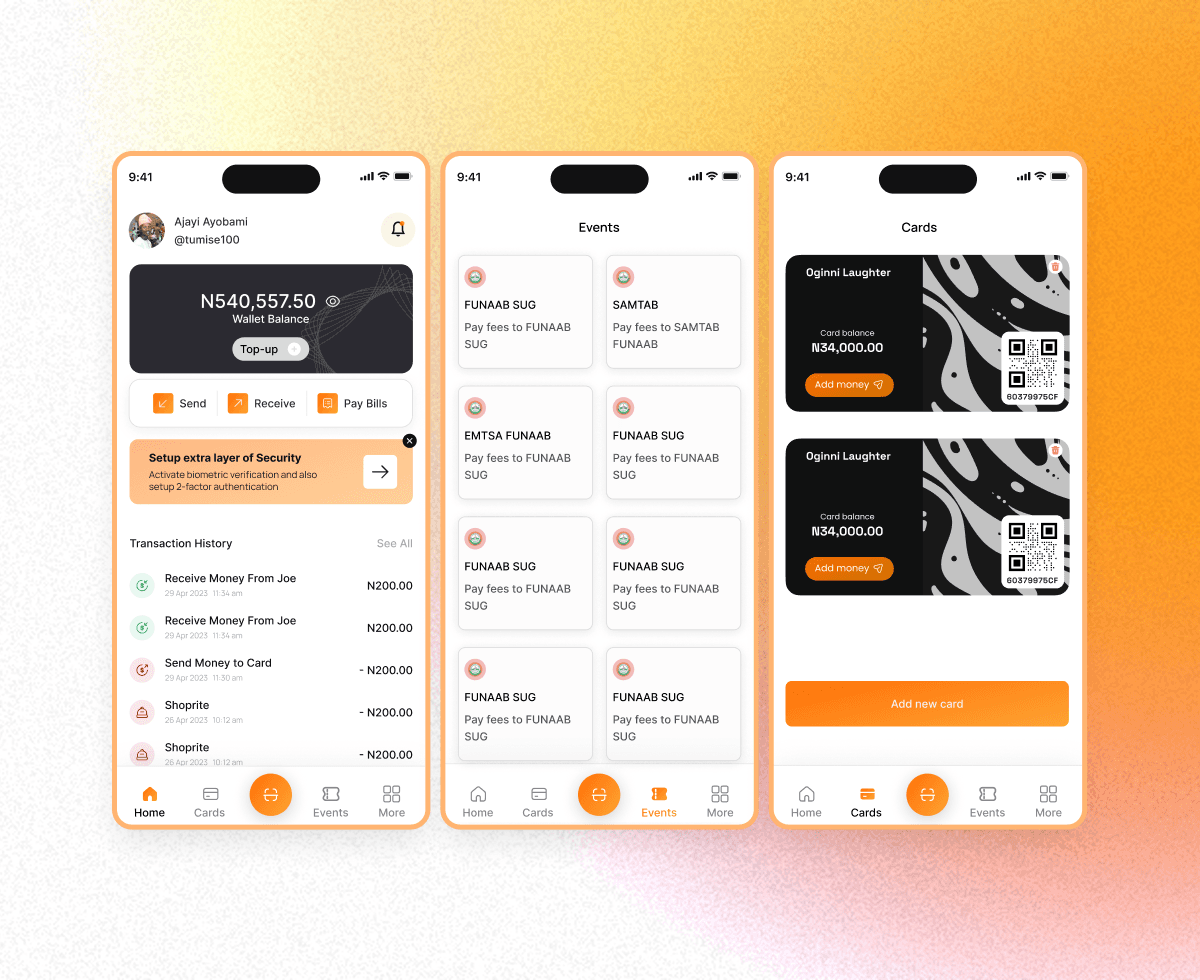
Integrated Payments: Designed the Virtuopay mobile app for easy digital payments, fully integrated with the physical Virtuocard, linking digital wallets to the school's cashless operations.
Visuals and Security: Prioritized visual clarity, accessibility, and a sense of security across all interfaces to foster trust in the digital system.
I approached this project by focusing on user needs and building trust to facilitate the transition from manual to digital systems. My process involved:
In-depth User Research: Conducted comprehensive research with students, teachers, and administrators to understand their daily workflows, challenges, and mental models regarding attendance, payments, records, scheduling, and expenses.
Synthesizing Findings: Analyzed research data to identify key pain points and opportunities for improvement.
Establishing Core Design Principles: Based on insights, I defined three core principles: simplicity (to reduce complexity), clear feedback (to guide users), and trust-building (to support the transition from manual processes).
Iterative Design & Prototyping: Developed tailored interfaces for different user groups and functionalities, including administrative dashboards, a teacher-focused mobile app for NFC attendance, student web dashboards, and the Virtuopay mobile app.
Usability Testing & Refinement: Conducted multiple rounds of usability testing and gathered feedback from pilot schools, which was critical in refining the design to meet real user needs and address adoption barriers.
Designing for Trust and Adoption
The design philosophy centered on creating a system that felt practical, user-centered, and well-suited to the everyday realities of school operations. Key considerations included:
Simplicity and Clarity: Focused on intuitive navigation, clear data entry, and straightforward workflows to reduce the learning curve and build user confidence.
Tailored User Experiences:
For Basic Schools: Designed administrative interfaces for managing student/staff records, assessments, expenses, and timetables. A dedicated teacher mobile app utilized NFC for seamless attendance. Student NFC cards enabled quick attendance and cashless payments.
For Tertiary Institutions: Developed a student web dashboard for course registration, fee payments (SUG, faculty, departmental), transaction history, and event ticketing. Separate interfaces were created for school, SUG, faculty, and departmental administrators to manage enrollment, course catalogs, lecturer information, and fee collections.
Integrated Payments: Designed the Virtuopay mobile app for easy digital payments, fully integrated with the physical Virtuocard, linking digital wallets to the school's cashless operations.
Visuals and Security: Prioritized visual clarity, accessibility, and a sense of security across all interfaces to foster trust in the digital system.
I approached this project by focusing on user needs and building trust to facilitate the transition from manual to digital systems. My process involved:
In-depth User Research: Conducted comprehensive research with students, teachers, and administrators to understand their daily workflows, challenges, and mental models regarding attendance, payments, records, scheduling, and expenses.
Synthesizing Findings: Analyzed research data to identify key pain points and opportunities for improvement.
Establishing Core Design Principles: Based on insights, I defined three core principles: simplicity (to reduce complexity), clear feedback (to guide users), and trust-building (to support the transition from manual processes).
Iterative Design & Prototyping: Developed tailored interfaces for different user groups and functionalities, including administrative dashboards, a teacher-focused mobile app for NFC attendance, student web dashboards, and the Virtuopay mobile app.
Usability Testing & Refinement: Conducted multiple rounds of usability testing and gathered feedback from pilot schools, which was critical in refining the design to meet real user needs and address adoption barriers.
Designing for Trust and Adoption
The design philosophy centered on creating a system that felt practical, user-centered, and well-suited to the everyday realities of school operations. Key considerations included:
Simplicity and Clarity: Focused on intuitive navigation, clear data entry, and straightforward workflows to reduce the learning curve and build user confidence.
Tailored User Experiences:
For Basic Schools: Designed administrative interfaces for managing student/staff records, assessments, expenses, and timetables. A dedicated teacher mobile app utilized NFC for seamless attendance. Student NFC cards enabled quick attendance and cashless payments.
For Tertiary Institutions: Developed a student web dashboard for course registration, fee payments (SUG, faculty, departmental), transaction history, and event ticketing. Separate interfaces were created for school, SUG, faculty, and departmental administrators to manage enrollment, course catalogs, lecturer information, and fee collections.
Integrated Payments: Designed the Virtuopay mobile app for easy digital payments, fully integrated with the physical Virtuocard, linking digital wallets to the school's cashless operations.
Visuals and Security: Prioritized visual clarity, accessibility, and a sense of security across all interfaces to foster trust in the digital system.
I approached this project by focusing on user needs and building trust to facilitate the transition from manual to digital systems. My process involved:
In-depth User Research: Conducted comprehensive research with students, teachers, and administrators to understand their daily workflows, challenges, and mental models regarding attendance, payments, records, scheduling, and expenses.
Synthesizing Findings: Analyzed research data to identify key pain points and opportunities for improvement.
Establishing Core Design Principles: Based on insights, I defined three core principles: simplicity (to reduce complexity), clear feedback (to guide users), and trust-building (to support the transition from manual processes).
Iterative Design & Prototyping: Developed tailored interfaces for different user groups and functionalities, including administrative dashboards, a teacher-focused mobile app for NFC attendance, student web dashboards, and the Virtuopay mobile app.
Usability Testing & Refinement: Conducted multiple rounds of usability testing and gathered feedback from pilot schools, which was critical in refining the design to meet real user needs and address adoption barriers.
Designing for Trust and Adoption
The design philosophy centered on creating a system that felt practical, user-centered, and well-suited to the everyday realities of school operations. Key considerations included:
Simplicity and Clarity: Focused on intuitive navigation, clear data entry, and straightforward workflows to reduce the learning curve and build user confidence.
Tailored User Experiences:
For Basic Schools: Designed administrative interfaces for managing student/staff records, assessments, expenses, and timetables. A dedicated teacher mobile app utilized NFC for seamless attendance. Student NFC cards enabled quick attendance and cashless payments.
For Tertiary Institutions: Developed a student web dashboard for course registration, fee payments (SUG, faculty, departmental), transaction history, and event ticketing. Separate interfaces were created for school, SUG, faculty, and departmental administrators to manage enrollment, course catalogs, lecturer information, and fee collections.
Integrated Payments: Designed the Virtuopay mobile app for easy digital payments, fully integrated with the physical Virtuocard, linking digital wallets to the school's cashless operations.
Visuals and Security: Prioritized visual clarity, accessibility, and a sense of security across all interfaces to foster trust in the digital system.
The Result
The Result
Key Metrics (within 7 months of operation)
Over 1,000 physical Virtuocards produced and adopted.
Over 41 million naira processed in transaction volume.
Over 19,000 successful individual transactions recorded across the platform.
Conclusion
The initial challenge of overcoming resistance to digital adoption in traditional Nigerian schools underscored the need for a thoughtfully designed, user-centric solution. Virtuocard successfully addresses these challenges by providing an intuitive and comprehensive platform that digitizes critical school operations.
Key design features, such as NFC-enabled cards for automated attendance and access, integrated cashless payments via Virtuopay, and tailored dashboards for diverse user needs (students, teachers, administrators across basic and tertiary levels), have been pivotal. These elements have streamlined internal processes, enhanced safety and accountability, and built significant trust among users. The strong adoption metrics demonstrate Virtuocard's effectiveness in transforming school management through user-focused design.
Key Metrics (within 7 months of operation)
Over 1,000 physical Virtuocards produced and adopted.
Over 41 million naira processed in transaction volume.
Over 19,000 successful individual transactions recorded across the platform.
Conclusion
The initial challenge of overcoming resistance to digital adoption in traditional Nigerian schools underscored the need for a thoughtfully designed, user-centric solution. Virtuocard successfully addresses these challenges by providing an intuitive and comprehensive platform that digitizes critical school operations.
Key design features, such as NFC-enabled cards for automated attendance and access, integrated cashless payments via Virtuopay, and tailored dashboards for diverse user needs (students, teachers, administrators across basic and tertiary levels), have been pivotal. These elements have streamlined internal processes, enhanced safety and accountability, and built significant trust among users. The strong adoption metrics demonstrate Virtuocard's effectiveness in transforming school management through user-focused design.
Key Metrics (within 7 months of operation)
Over 1,000 physical Virtuocards produced and adopted.
Over 41 million naira processed in transaction volume.
Over 19,000 successful individual transactions recorded across the platform.
Conclusion
The initial challenge of overcoming resistance to digital adoption in traditional Nigerian schools underscored the need for a thoughtfully designed, user-centric solution. Virtuocard successfully addresses these challenges by providing an intuitive and comprehensive platform that digitizes critical school operations.
Key design features, such as NFC-enabled cards for automated attendance and access, integrated cashless payments via Virtuopay, and tailored dashboards for diverse user needs (students, teachers, administrators across basic and tertiary levels), have been pivotal. These elements have streamlined internal processes, enhanced safety and accountability, and built significant trust among users. The strong adoption metrics demonstrate Virtuocard's effectiveness in transforming school management through user-focused design.
Key Metrics (within 7 months of operation)
Over 1,000 physical Virtuocards produced and adopted.
Over 41 million naira processed in transaction volume.
Over 19,000 successful individual transactions recorded across the platform.
Conclusion
The initial challenge of overcoming resistance to digital adoption in traditional Nigerian schools underscored the need for a thoughtfully designed, user-centric solution. Virtuocard successfully addresses these challenges by providing an intuitive and comprehensive platform that digitizes critical school operations.
Key design features, such as NFC-enabled cards for automated attendance and access, integrated cashless payments via Virtuopay, and tailored dashboards for diverse user needs (students, teachers, administrators across basic and tertiary levels), have been pivotal. These elements have streamlined internal processes, enhanced safety and accountability, and built significant trust among users. The strong adoption metrics demonstrate Virtuocard's effectiveness in transforming school management through user-focused design.
PORTFOLIO
CHECK OUT SOME MORE
CHECK OUT SOME MORE
CHECK OUT SOME MORE
CHECK OUT SOME MORE
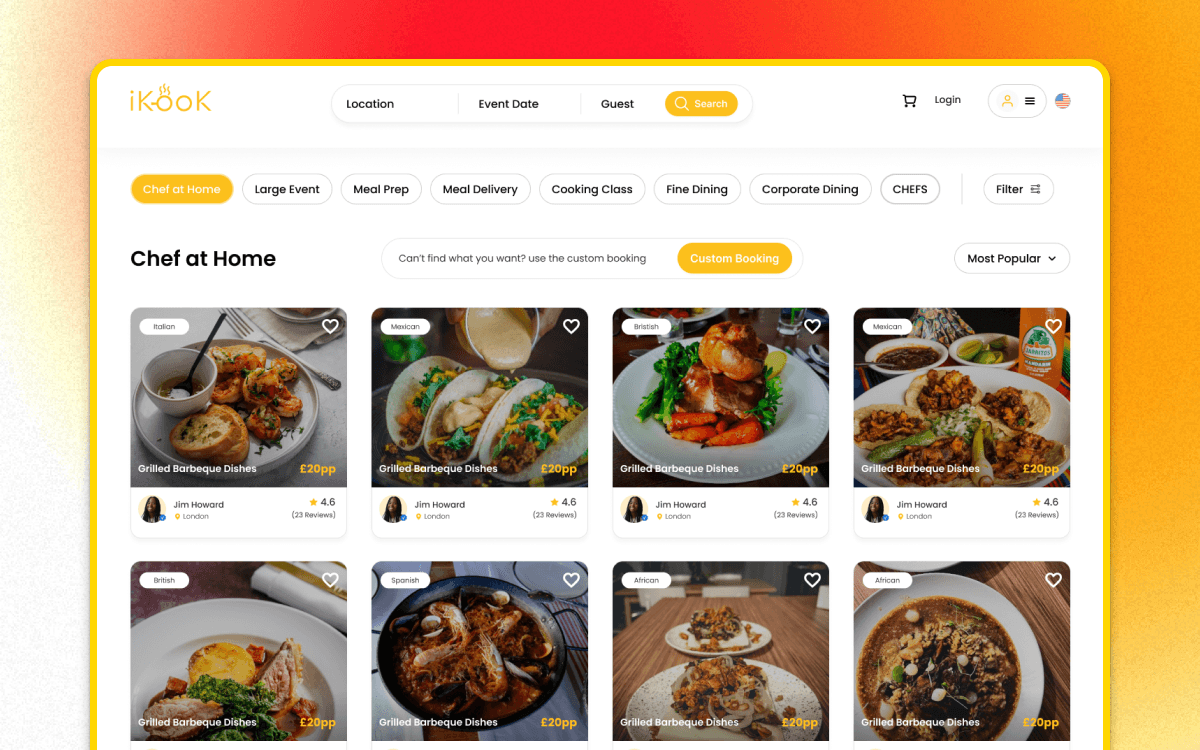

Revitalizing iKooK: Redesign for a Seamless Private Chef Booking Experience
Revitalizing iKooK: Redesign for a Seamless Private Chef Booking Experience
Revitalizing iKooK: Redesign for a Seamless Private Chef Booking Experience
Revitalizing iKooK: Redesign for a Seamless Private Chef Booking Experience
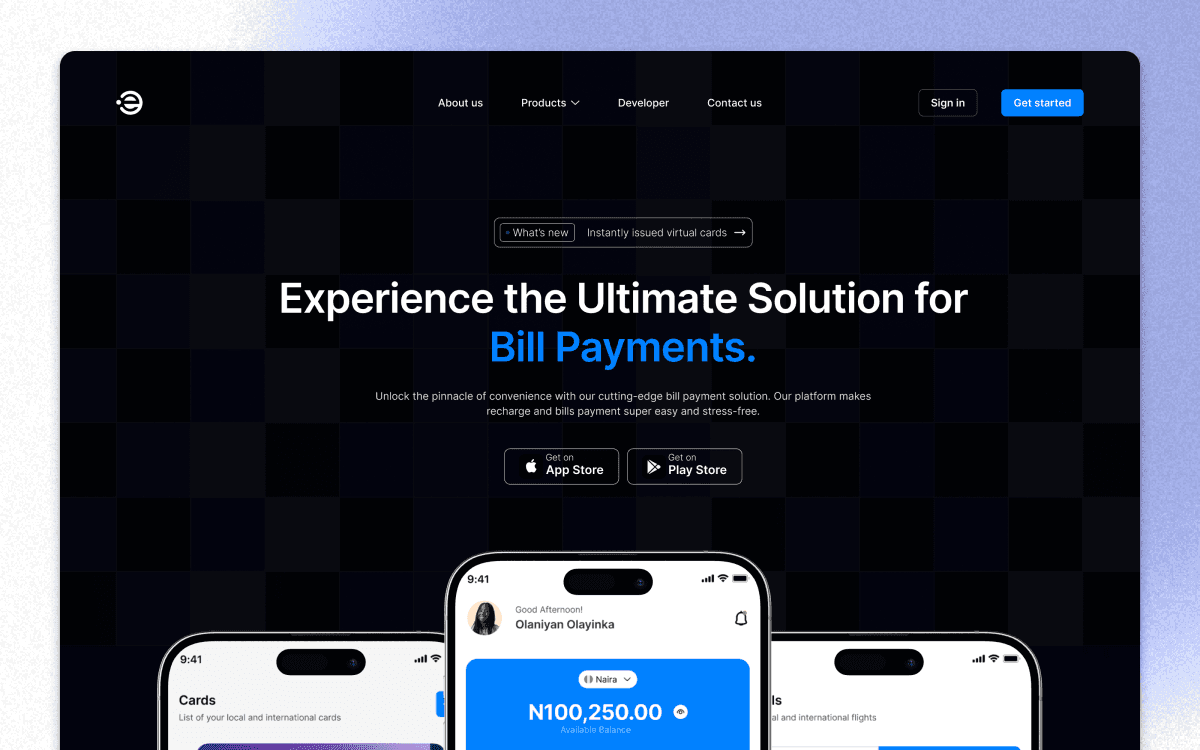
Eloaded
Eloaded
Eloaded
Simplifying Digital Life: The Design of eLoaded's All-in-One Fintech Platform
Eloaded
Eloaded
Eloaded
Simplifying Digital Life: The Design of eLoaded's All-in-One Fintech Platform
Eloaded
Eloaded
Eloaded
Simplifying Digital Life: The Design of eLoaded's All-in-One Fintech Platform
Eloaded
Eloaded
Eloaded
Simplifying Digital Life: The Design of eLoaded's All-in-One Fintech Platform
HAVE A PROJECT
IN MIND ?